
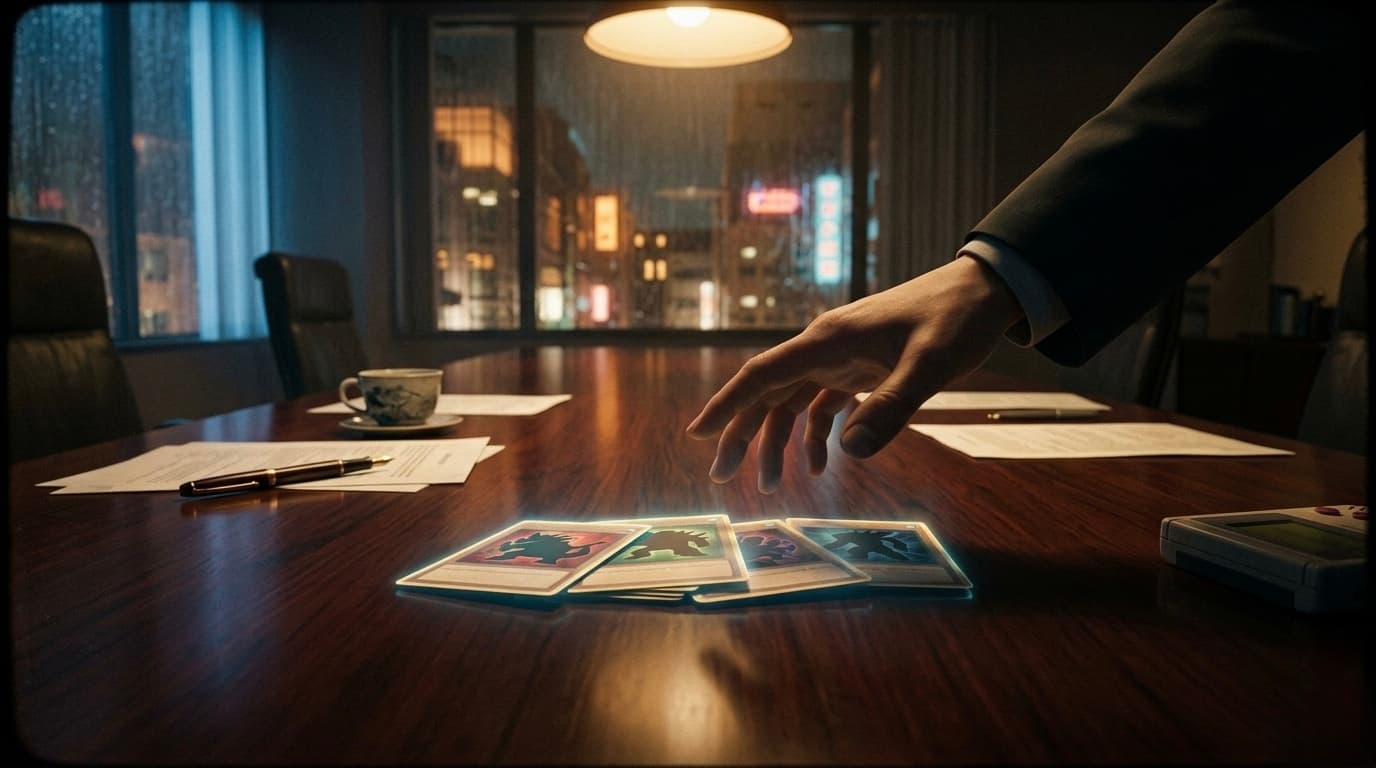
Nintendo Almost Never Launched the Pokémon TCG
In 1996, the Pokémon TCG almost never saw the light of day. Internal reluctance, tense negotiations: the little-known story of a decision that changed everything.
Nintendo Almost Never Launched the Pokémon TCG: the little-known story
The story of the Nintendo Pokémon TCG launch is often summed up in a few lines: in October 1996, Media Factory released the Pokémon card game in Japan, and success was immediate. But behind this tidy timeline lies a far more complex reality. For months, the very idea of turning Satoshi Tajiri's universe into a collectible card game stirred doubts, resistance, and debates that could have smothered the project in its cradle. Here is the little-known behind-the-scenes story of a decision that changed the card-gaming world forever.
A universe born from a childhood obsession
To understand why the Pokémon TCG almost didn't exist, you have to go back to the source: Satoshi Tajiri himself.
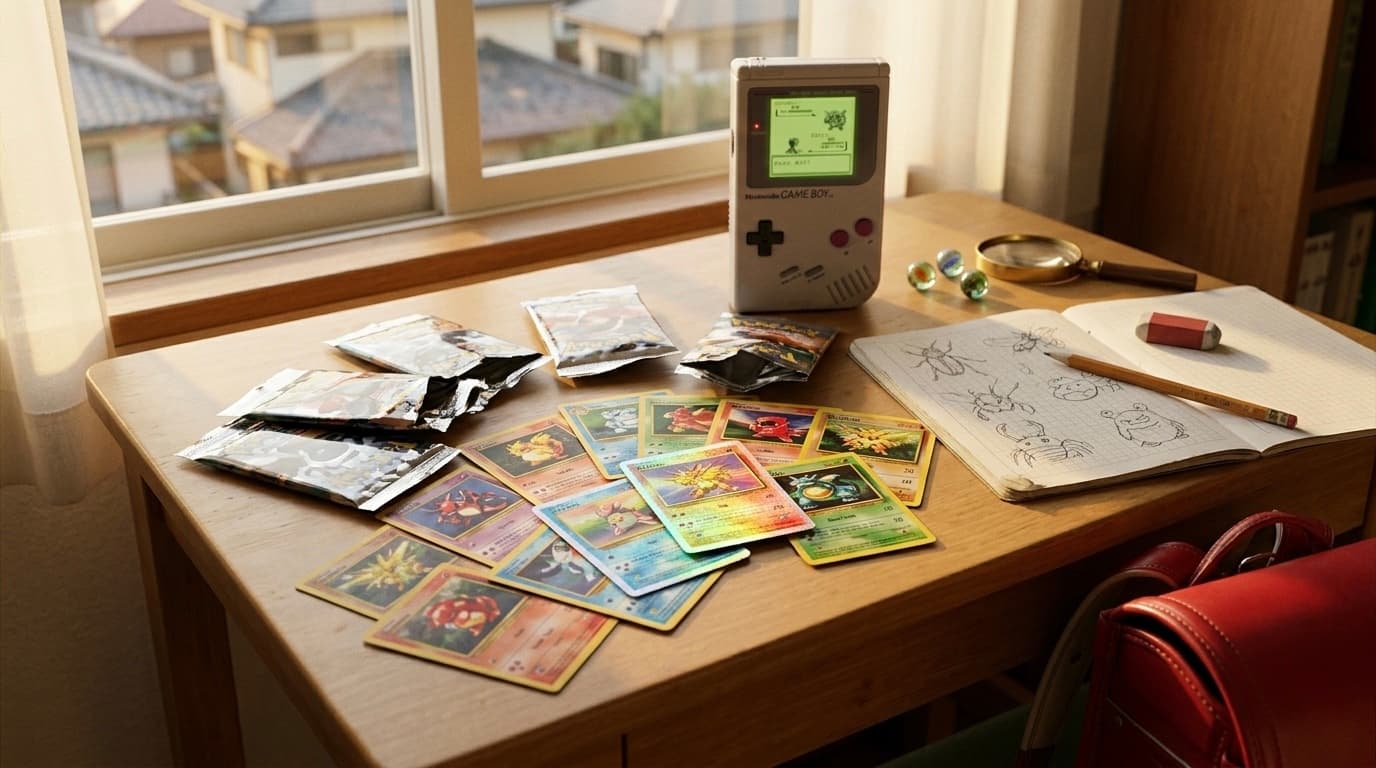
As a child, Tajiri spent his days catching insects in the fields around Machida, a city southwest of Tokyo. This passion for collecting, classifying, and trading would become the creative engine of his entire career. In the early 1980s, he founded the fanzine Game Freak with his friend Ken Sugimori, a talented illustrator, before turning the operation into a development studio in 1989.
It was that same year that Tajiri first formulated Pokémon's central idea: creatures you capture, evolve, and trade with other players via the Game Boy's Game Link cable. The concept of connection between players is at the heart of everything, from the very start. It would take until February 1996, however, for Pocket Monsters Red and Pocket Monsters Green to be released in Japan, after six years of chaotic development.
The idea of a card game: obvious… on paper
When the video games began finding their audience in the spring of 1996, a logical question quickly arose in the creative circles orbiting the Pokémon universe: what if this collection-and-trade mechanic were transposed onto a physical medium?
The collectible card game was not a new concept in 1996. Magic: The Gathering had existed since 1993 and enjoyed resounding worldwide success. The business model was proven, the appeal of rarity and trading was well documented. On paper, marrying the Pokémon universe to this format seemed obvious.
But obvious ideas, in business, always run into the same obstacles: who takes the risk? Who funds it? And above all, who controls it?
Internal reluctance: protecting the franchise's image
Nintendo, as a partial rights holder to the Pokémon franchise alongside Game Freak and Creatures Inc., held a particular position. The Kyoto firm had built its reputation on total mastery of its universes. Diluting Pokémon into a third-party product, developed by an outside publisher, represented a non-negligible image risk.
The main fear was a botched execution: poor-quality cards, ill-conceived gameplay, an experience that could have harmed the fledgling perception of the franchise. In 1996, Pokémon was not yet the global juggernaut we know today. It was a promising, fragile license, carried by two video games and the energy of a still-young community.
Media Factory enters the scene
It was in this context that Media Factory stepped in, a Japanese publisher founded in 1986, specializing in magazines, light novels, and cultural merchandise. The company had experience with niche products holding strong community potential, and it saw a unique opportunity in Pokémon.
The negotiations between Media Factory, Nintendo, and the Pokémon rights holders to secure the card-game license were, according to accounts available in the Japanese specialist press of the time, far from a mere formality. The various parties had to be convinced that the collectible-card format would respect the franchise's original spirit: collecting, trading, battling among friends.
One factor probably worked in Media Factory's favor: the involvement of Takumi Akabane and the development team that would give rise to the original game mechanics. The Pokémon TCG isn't just a piece of merchandise. It was conceived as a game in its own right, with its own strategic rules, designed to be accessible to children while offering enough depth for older collectors.
October 1996: the launch, between hope and uncertainty
On October 20, 1996, the Pokémon Trading Card Game was officially released in Japan. The first two starter decks, Venusaur and Charizard, along with the first booster packs went on sale. The initial print run was cautious, far from the millions of copies that would characterize later launches.
No one, at that stage, could predict the scale of what was to come. The history of the Nintendo Pokémon TCG launch was then written day by day, in Japanese schoolyards, where children began trading their cards with the same fervor Tajiri had shown catching insects thirty years earlier.
Sales took off gradually. The synergy with the video game, the anime that began airing in April 1997, and the addictive mechanics of booster packs created a momentum no one had fully anticipated, not even the most optimistic within Media Factory.
Going international: a new challenge
Buoyed by its Japanese success, Nintendo decided to bring the TCG to the international stage. In the United States, it was Wizards of the Coast, the publisher of Magic: The Gathering, that secured the license to distribute the game outside Japan. The Pokémon TCG landed in North America in January 1999, in the midst of the worldwide Pokémania triggered by the anime.
The rest is history: stock shortages, resale at sky-high prices in schoolyards, rare cards becoming genuine objects of desire. The very dynamic that had nearly blocked the project, the fear of diluting the franchise, retrospectively became proof that the license had been well protected.
What this story tells us about Pokémon
The history of the Nintendo Pokémon TCG launch is above all a lesson in how great franchises are built: through doubt, negotiation, and sometimes despite internal resistance. Tajiri had imagined a world of collecting and trading. It took years, several companies, and a collective willingness to take risks for that vision to find its cardboard embodiment.
Today, more than 45 billion cards have been printed worldwide (a figure reported by The Pokémon Company). This staggering number traces back to a decision made in 1996, in Tokyo meeting rooms where no one was entirely sure it would work.
Track the value of your cards on PokéItem
This story reminds you that behind every card lies a narrative far greater than we imagine. If you collect cards from these early generations, or more recent releases, PokéItem lets you track the evolution of their value in real time, organize your collection, and never miss an opportunity. The story keeps being written, card after card.
Last updated: 19 July 2026
Back to blogAlso worth reading
Track your cards' value day by day
Scan your cards, organise your collection and get price alerts, all on PokéItem.